
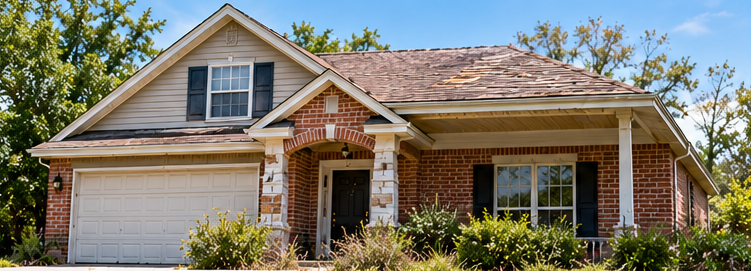
Start by Understanding What the House Actually Needs
Before making major decisions, separate what you know from what you’re assuming.
If possible, identify the property’s major issues and gather any documentation you already have.
That might include information about:
- Roof condition
- Foundation or structural issues
- HVAC systems
- Electrical systems
- Plumbing
- Water or fire damage
- Windows
- Deferred maintenance
- Significant cosmetic deterioration
- Unfinished renovation projects
You don’t necessarily need to repair these items. But understanding the scope of the problem makes it easier to compare your selling options.

Option 1: Complete the Repairs Before Selling
Repairing the property may open the home to a larger pool of buyers and potentially support a higher sale price.
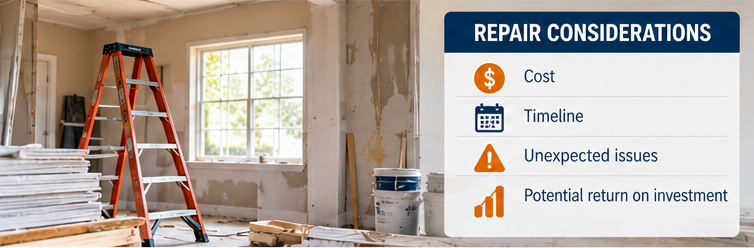
But major renovations introduce risk.
Contractor estimates can change. Projects can uncover additional problems. Materials can cost more than expected. Timelines can stretch.
And most importantly, the amount you spend isn’t automatically the amount you’ll recover.
Before investing heavily in repairs, compare the likely increase in the home’s value with the actual cost and inconvenience of completing the work.
Option 2: Make Only the Most Important Repairs
The decision doesn’t have to be “fix everything” or “fix nothing.”
In some situations, addressing a few significant issues while leaving cosmetic improvements to the next owner can make sense.
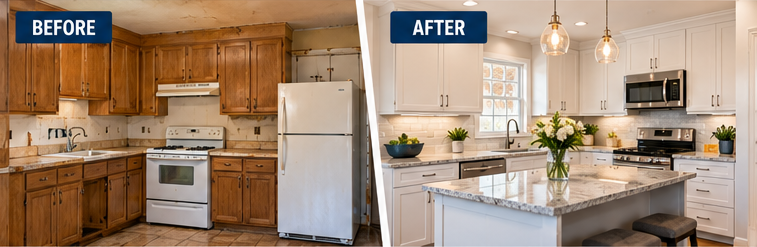
For example, correcting a safety issue may expand your buyer pool even if you leave an outdated kitchen untouched.
The challenge is determining which improvements genuinely improve the home’s marketability enough to justify their cost.
This is an area where advice from an experienced local real estate professional can be particularly valuable.
Option 3: List the Property As-Is
You can also offer the property on the traditional market in its current condition.
An as-is property may attract investors, renovation-minded homeowners and buyers specifically looking for a fixer-upper.
The downside is that significant condition problems may limit the buyer pool.
Certain issues can also create challenges for buyers relying on traditional financing or insurance.
An as-is listing doesn’t make those issues disappear—it simply means you’re approaching the sale with the expectation that the property’s condition will be reflected in buyer interest and pricing.

Option 4: Explore Investor Buyers
Investors evaluate properties differently from many traditional homebuyers.
A homeowner may walk into a house with a dated kitchen, damaged flooring and an old roof and see an overwhelming list of projects.
An experienced investor may see a renovation budget.
That’s an important distinction.
Investors routinely evaluate acquisition price, repair costs, carrying costs and the property’s potential after improvements.
For homeowners who don’t want to manage major repairs themselves, that can create another path to selling.
Why Multiple Investor Bids Matter
If you’ve ever received a postcard, text or letter saying “We Buy Houses,” you may already know that investors are interested in properties needing work.
But there’s a difference between asking:
“What will this investor pay?”
and asking:
“What are qualified investors willing to pay?”
iFinder was designed around the second question.
Rather than acting as the buyer, iFinder provides a way for properties to be presented to a network of vetted investors. Interested investors can bid, and sellers can evaluate the available options.
That distinction can be particularly meaningful with repair-heavy properties because different investors may evaluate the same project differently.
One investor’s renovation strategy, costs and preferred neighborhood may be very different from another’s.

Consider the Cost of Doing Nothing
There’s another number homeowners sometimes overlook: the cost of continuing to own the property.
If repairs will take several months, you may continue paying:
- Mortgage payments
- Property taxes
- Insurance
- Utilities
- Lawn care
- HOA dues
- Maintenance
- Security or monitoring on a vacant property
For an inherited or vacant house, those carrying costs can be especially frustrating because you’re spending money on a property you aren’t using.
Factor those expenses into your comparison.
Compare the Net Result, Not Just the Selling Price
Imagine two choices.
One produces a higher sale price but requires months of work and a substantial upfront investment.
The other produces a lower sale price but requires little or no repair spending and allows you to move on sooner.
Which is better?
You can’t answer that by looking at sale price alone.
Consider:
Expected sale price
minus repair costs
minus selling expenses
minus carrying costs
minus the value you place on your time and inconvenience.
Then compare that with your as-is alternatives.
The numbers may confirm that repairing the property is worthwhile.
Or they may tell you something completely different.
The Bottom Line
A house that needs major repairs is still a sellable house.
The real question isn’t whether you can sell it.
It’s which selling strategy makes the most sense for your situation.
Repairing and listing may produce the best result for one homeowner. An as-is traditional listing may be right for another. And for someone who values convenience, timing or avoiding a major renovation project, investor bids may deserve serious consideration.
Before committing thousands of dollars to repairs, find out what your alternatives look like.
iFinder can help expose your property to vetted real estate investors so you can evaluate potential bids and decide whether repairing, listing or selling as-is is the better choice for you.

Want to see whether investors may be interested in your property?
Learn how iFinder can help you explore investor bids without first turning your home into a renovation project.